1From the Stall to the Freezer
Squeeze gently before you buy. A ripe mango gives slightly under your thumb, the way a peach does — it doesn't need to look dramatically orange or red, because colour varies wildly by variety. The Ataulfo (also called Champagne mango, grown mainly in Mexico) turns golden and starts to wrinkle slightly at the shoulders when it's ready. The larger Tommy Atkins, the one most supermarkets stock year-round, should feel heavy and yield just a little. A fruity scent at the stem end is the surest sign of all.
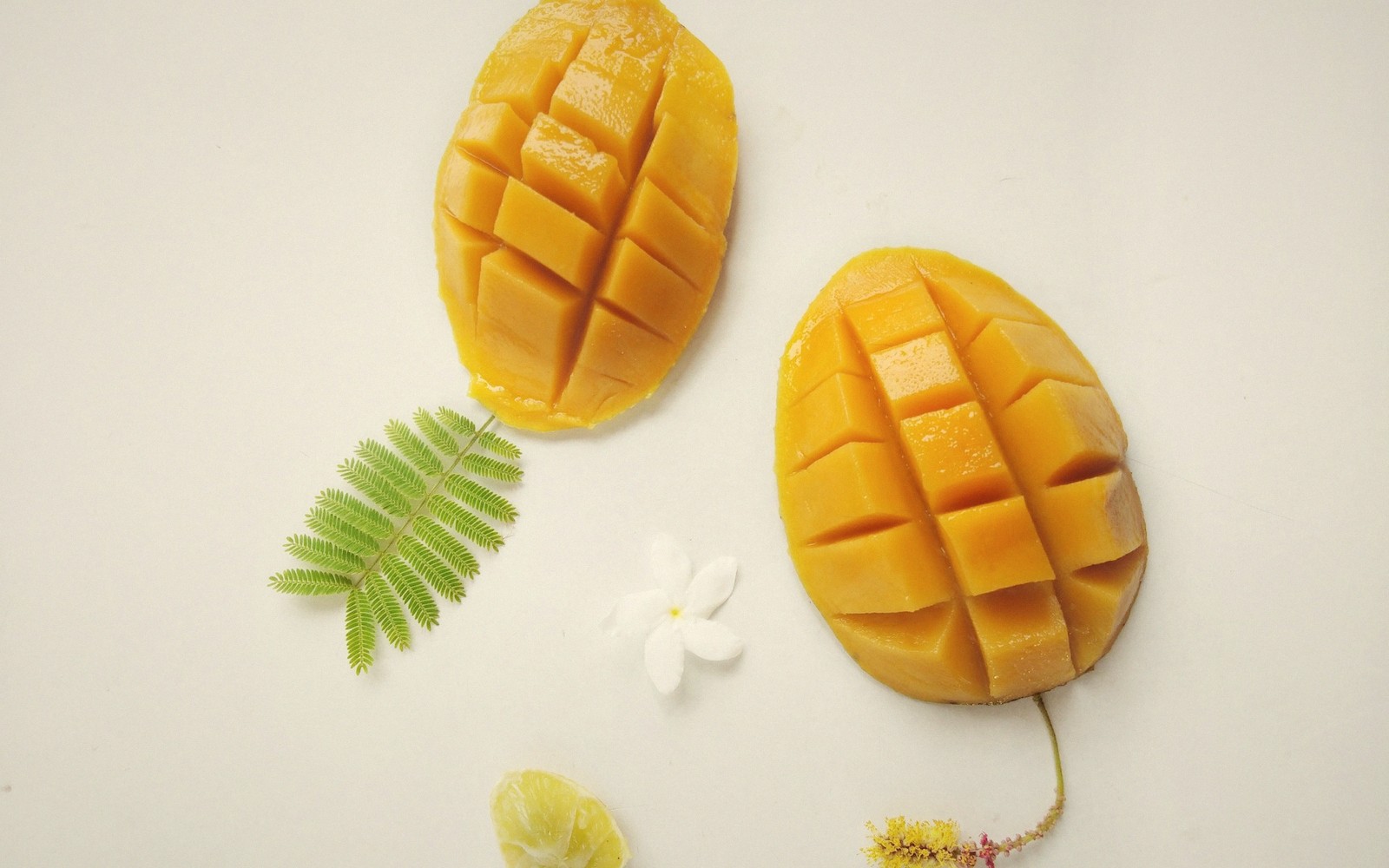
At home, the trick to cutting without the strings is to work around the flat central stone. Stand the mango on its end and slice down either side of it, keeping your knife as close to the stone as possible — you'll get two large "cheeks". Score each cheek in a cross-hatch pattern, push the skin side up to fan the cubes, then run your knife along the base to free them. The leftover flesh around the stone is yours to gnaw over the sink; that part is the cook's privilege.
For freezing, spread the cubes in a single layer on a baking sheet lined with parchment and freeze until solid — usually two hours. Then transfer to a bag or container. This step stops them clumping into one immovable block, which is exactly the frozen fruit trick that applies to almost every soft fruit you'll ever prep ahead. Frozen mango keeps well for around three months before the flavour starts to dull.
In the blender, frozen mango brings a thick, almost creamy body and a clean tropical sweetness that needs very little help. Fresh mango works too, but pair it with a handful of ice or a frozen banana to get the same velvety result. Either way, once you've nailed the prep, the blend takes care of itself.